Euclid Book I PROP. XLV. -- PROBLEM.
To construct a parallelogram equal to a given rectilineal figure (ABCD), and having an angle equal to a given rectilineal angle (X).
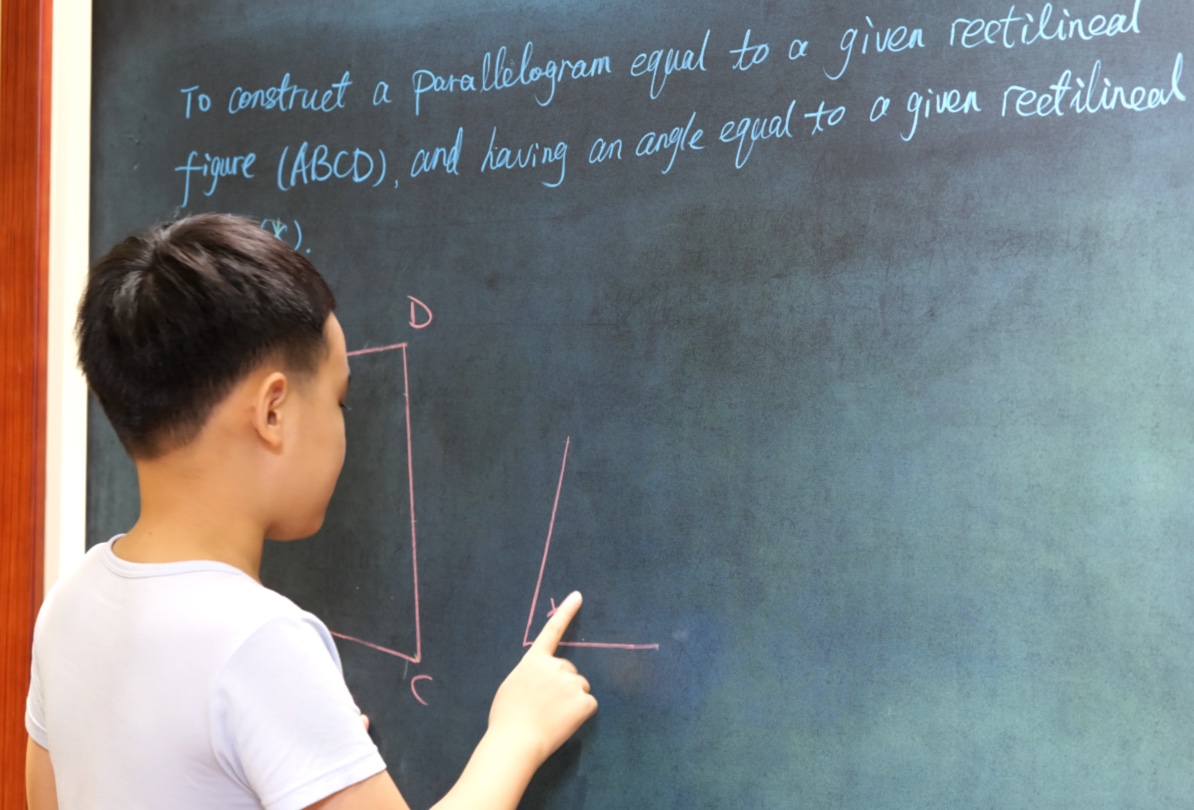

To construct a parallelogram equal to a given rectilineal figure (ABCD), and having an angle equal to a given rectilineal angle (X).
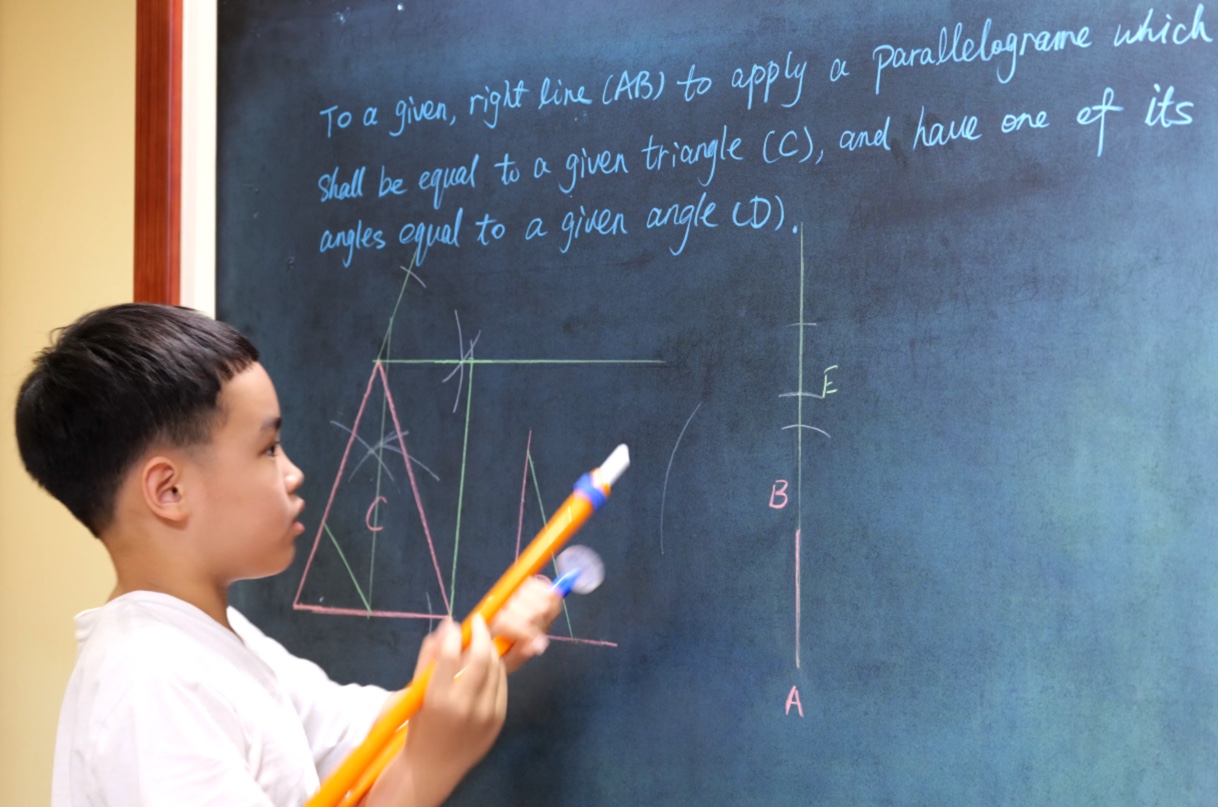
To a given, right line (AB) to apply a parallelogram which shall be equal to a given triangle (C), and have one of its angles equal to a given angle (D).
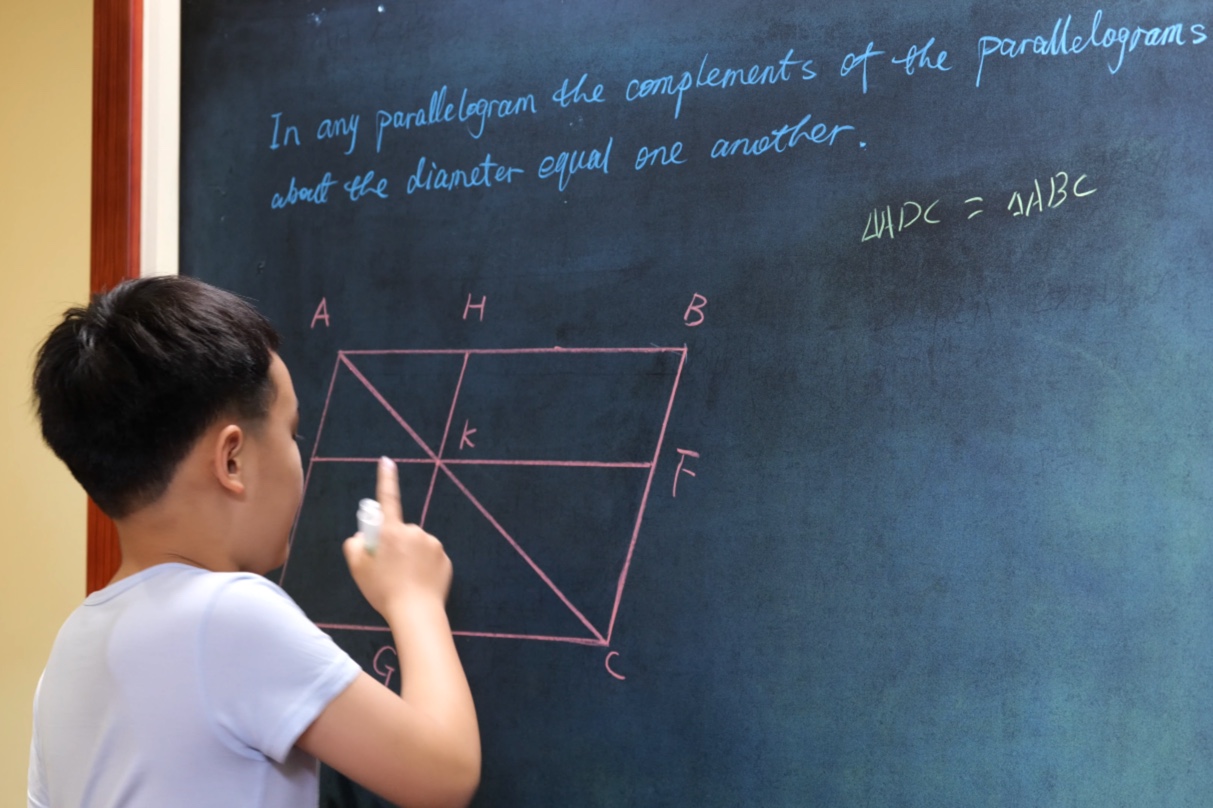
In any parallelogram the complements of the parallelograms about the diameter equal one another.
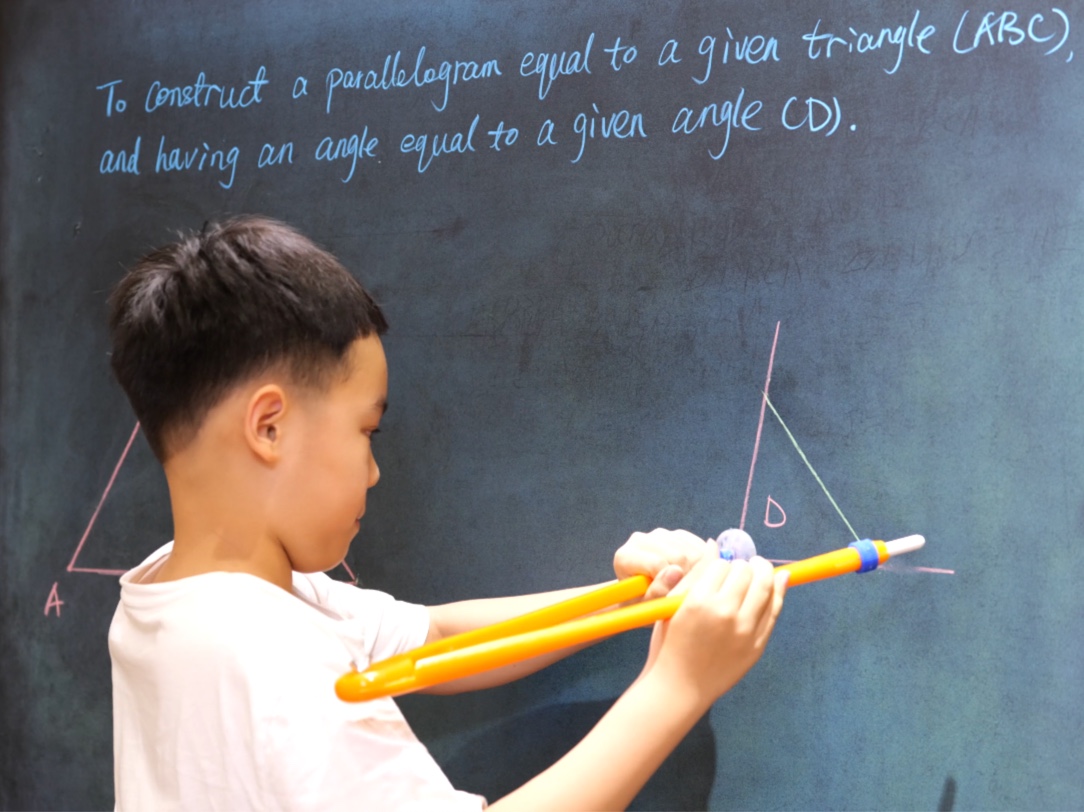
To construct a parallelogram equal to a given triangle (ABC), and having an angle equal to a given angle (D).
If a parallelogram (ABCD) and a triangle (EBC) be on the same base (BC) and between the same parallels, the parallelogram is double of the triangle.

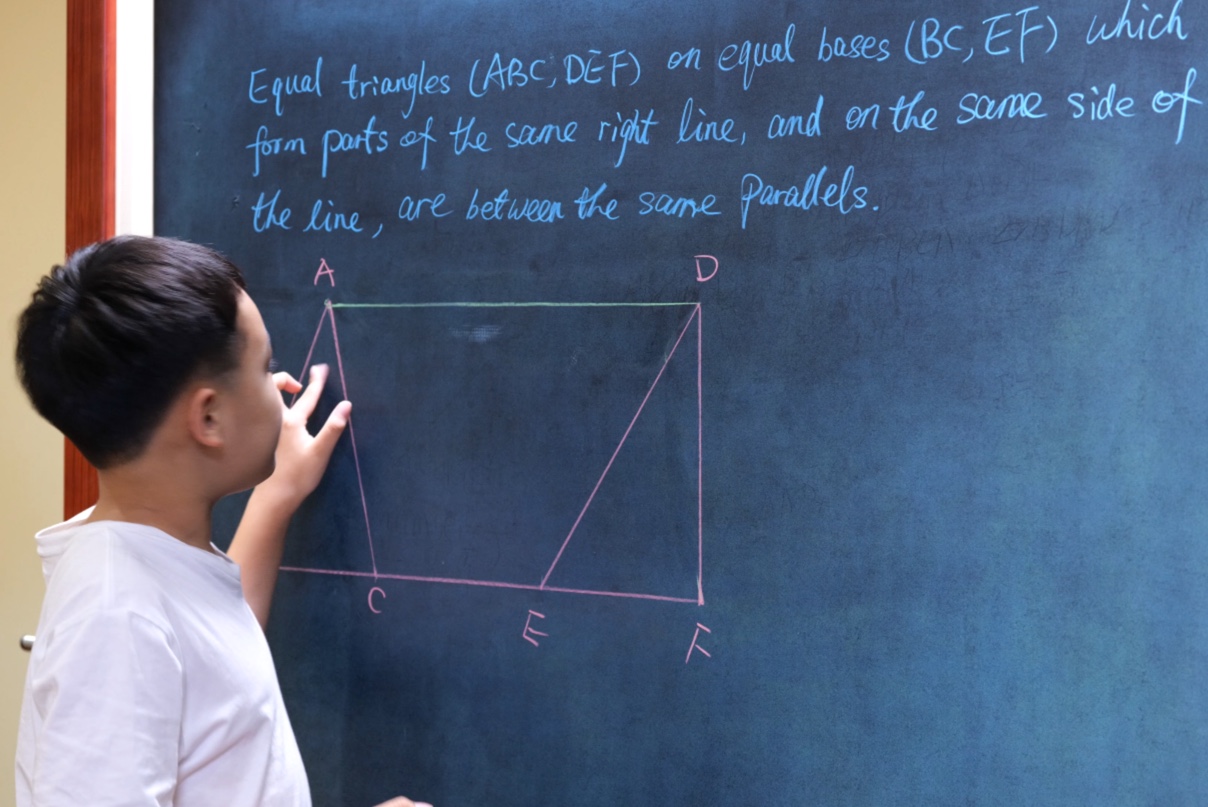
Equal triangles (ABC, DEF) on equal bases (BC, EF) which form parts of the same right line, and on the same side of the line, are between the same parallels.
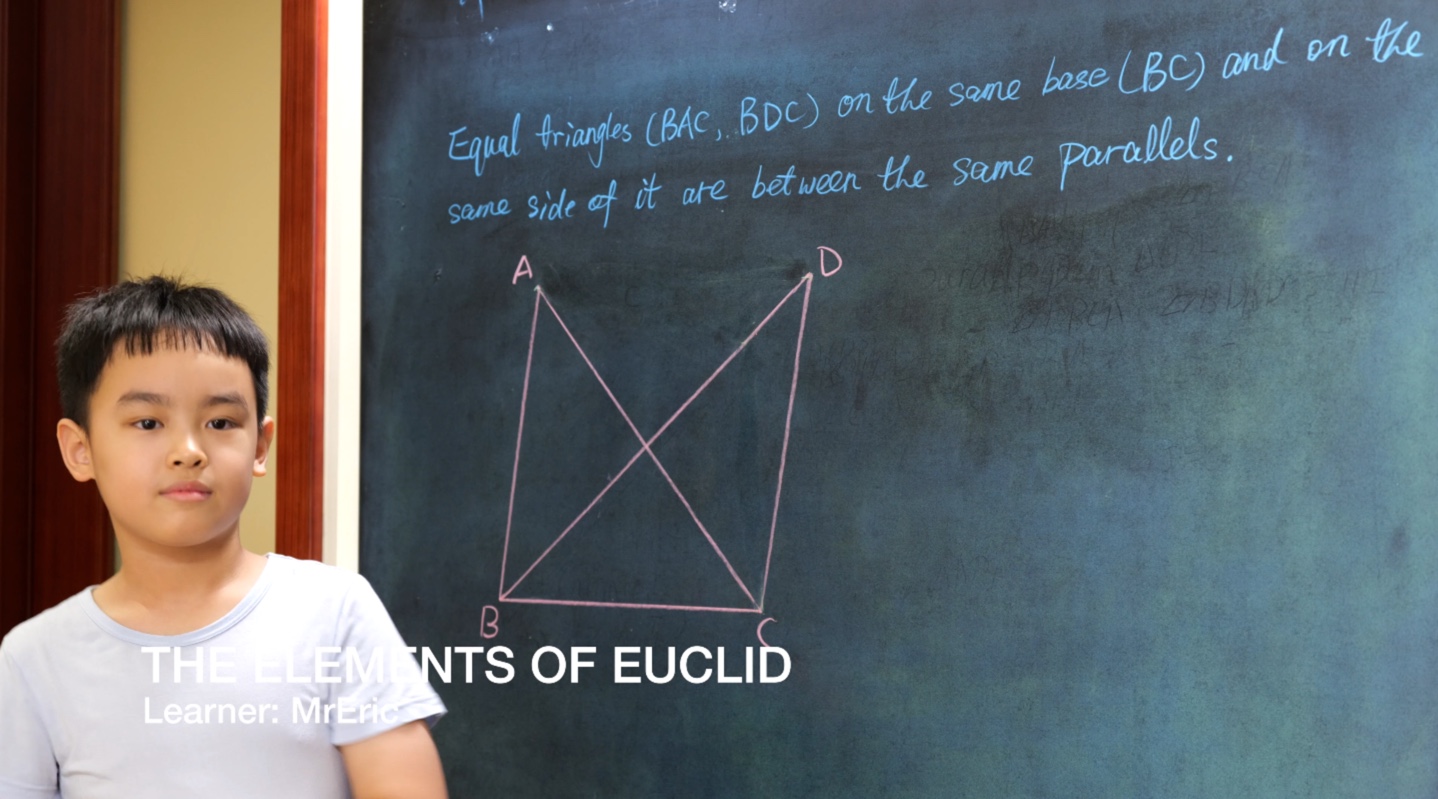
Equal triangles (BAC, BDC) on the same base (BC) and on the same side of it are between the same parallels.
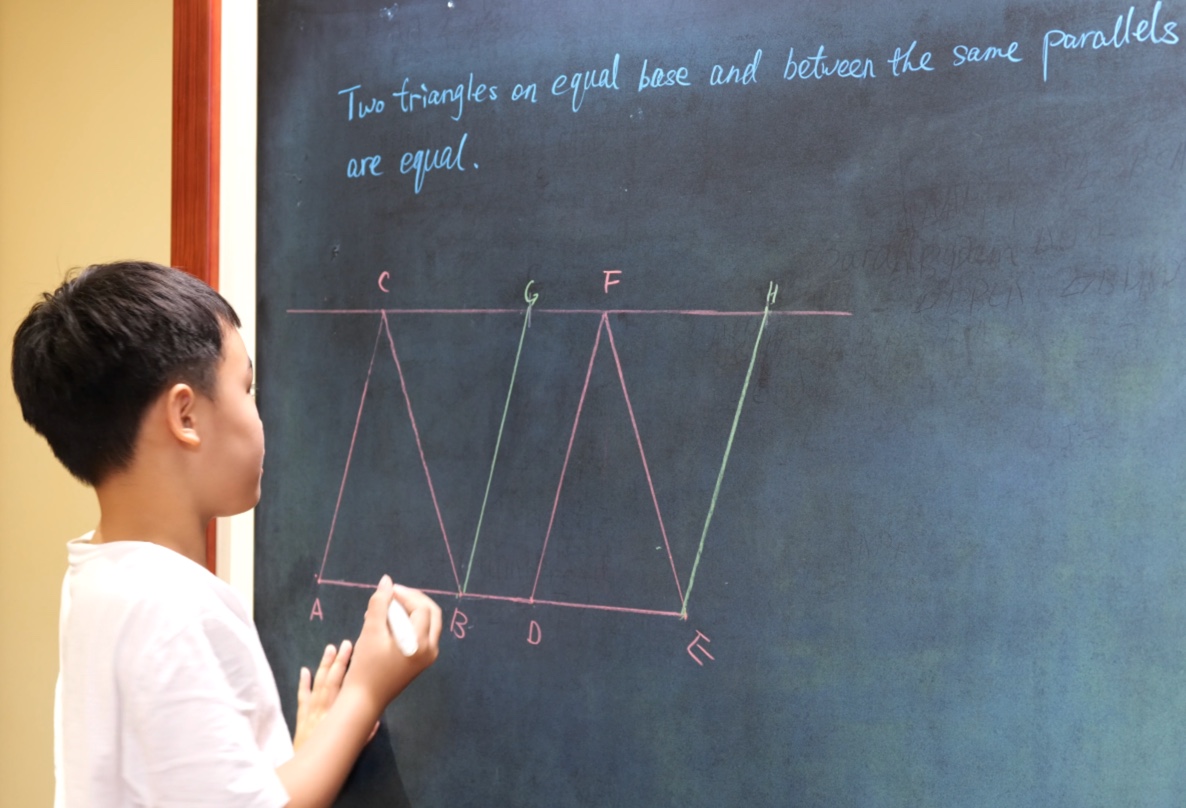
Two triangles on the equal bases and between the same parallels are equal.
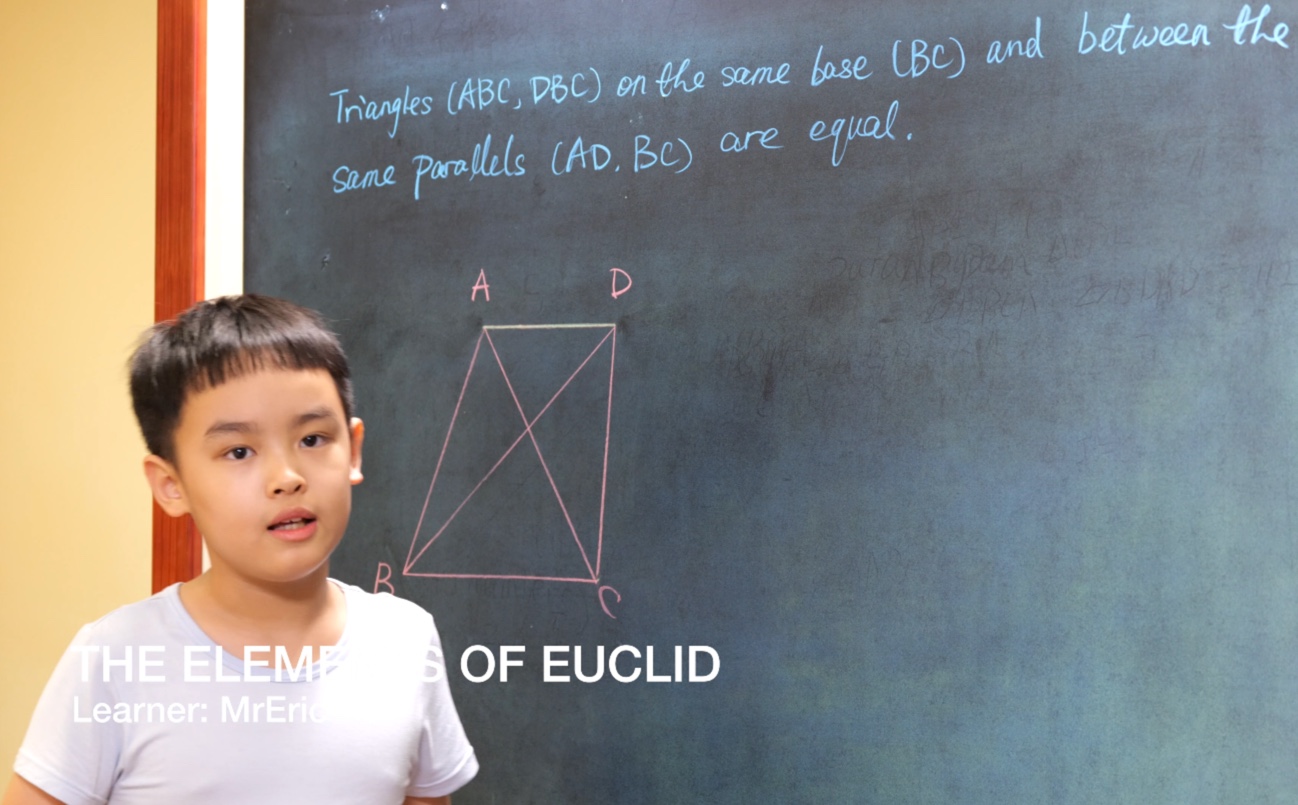
Triangles (ABC, DBC) on the same base (BC) and between the same parallels (AD, BC) are equal.
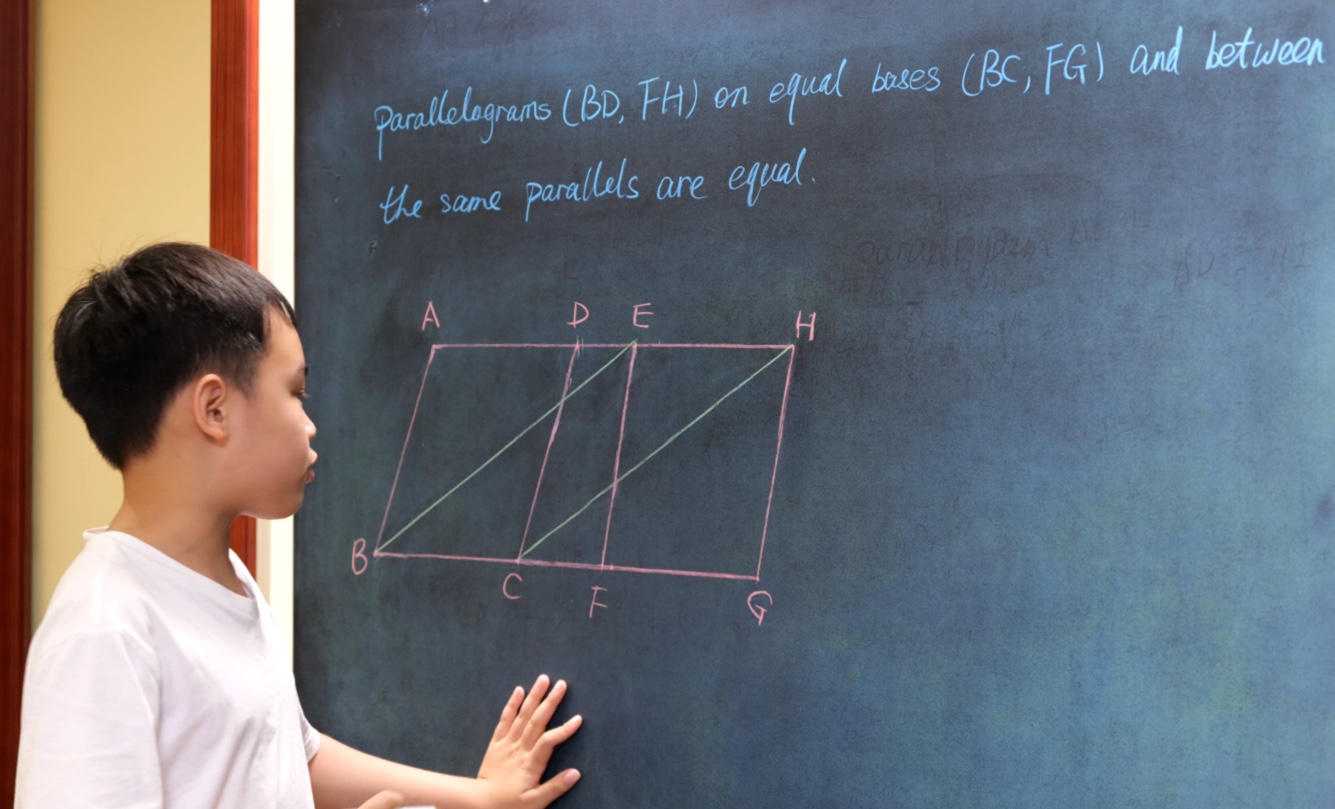
Parallelograms (BD, FH) on equal bases (BC, FG) and between then same parallels are equal.
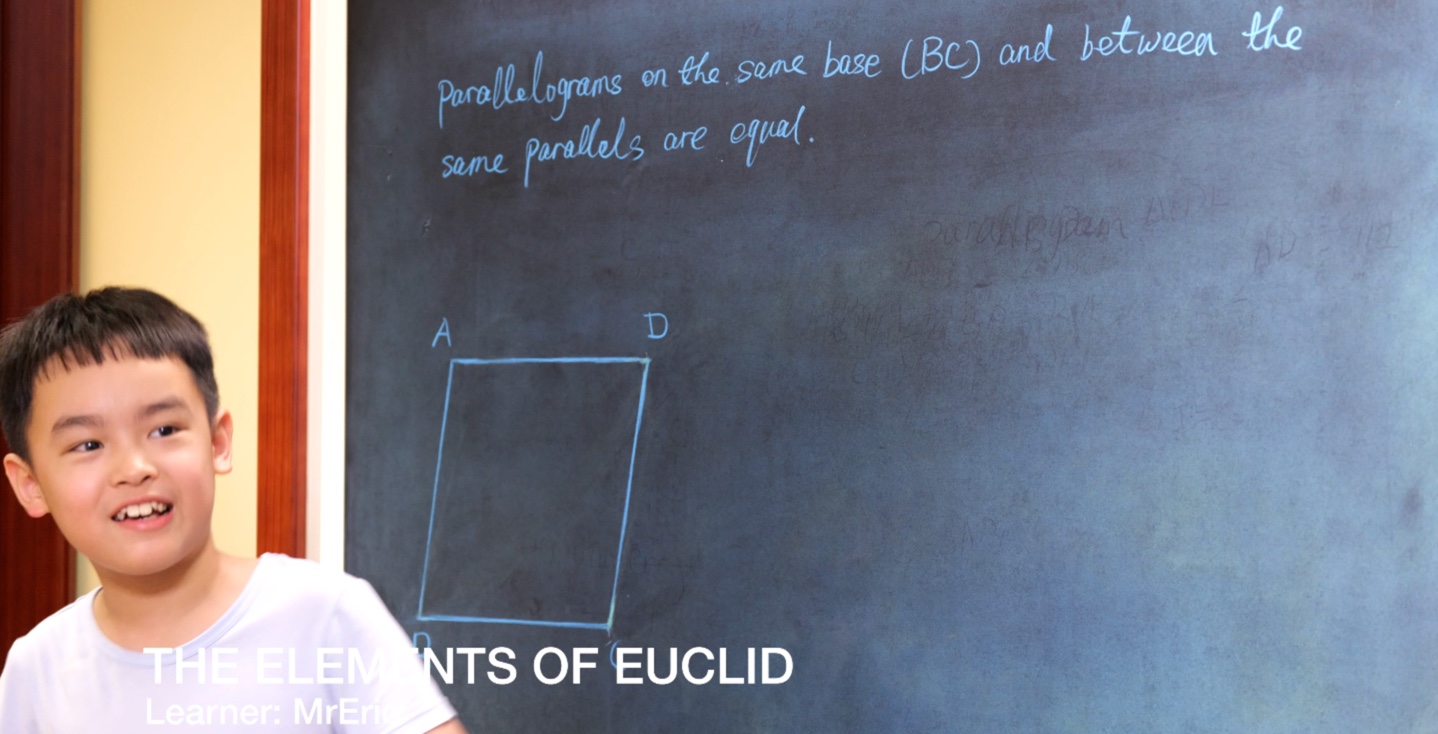
Parallelograms on the same base (BC) and between the same parallels are equal.
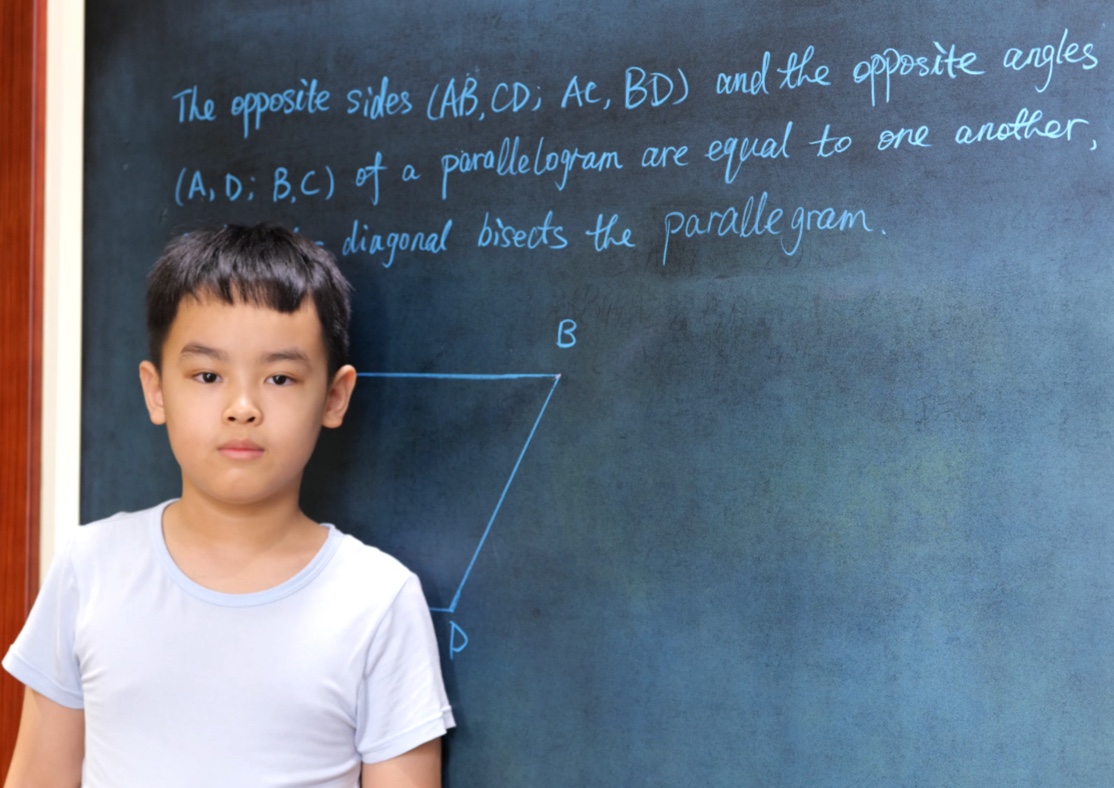
The opposite sides (AB, CD,; AC, BD) and the opposite angles (A, D; B, C) of a parallelogram are equal to one another, and either diagonal bisects the parallelogram.
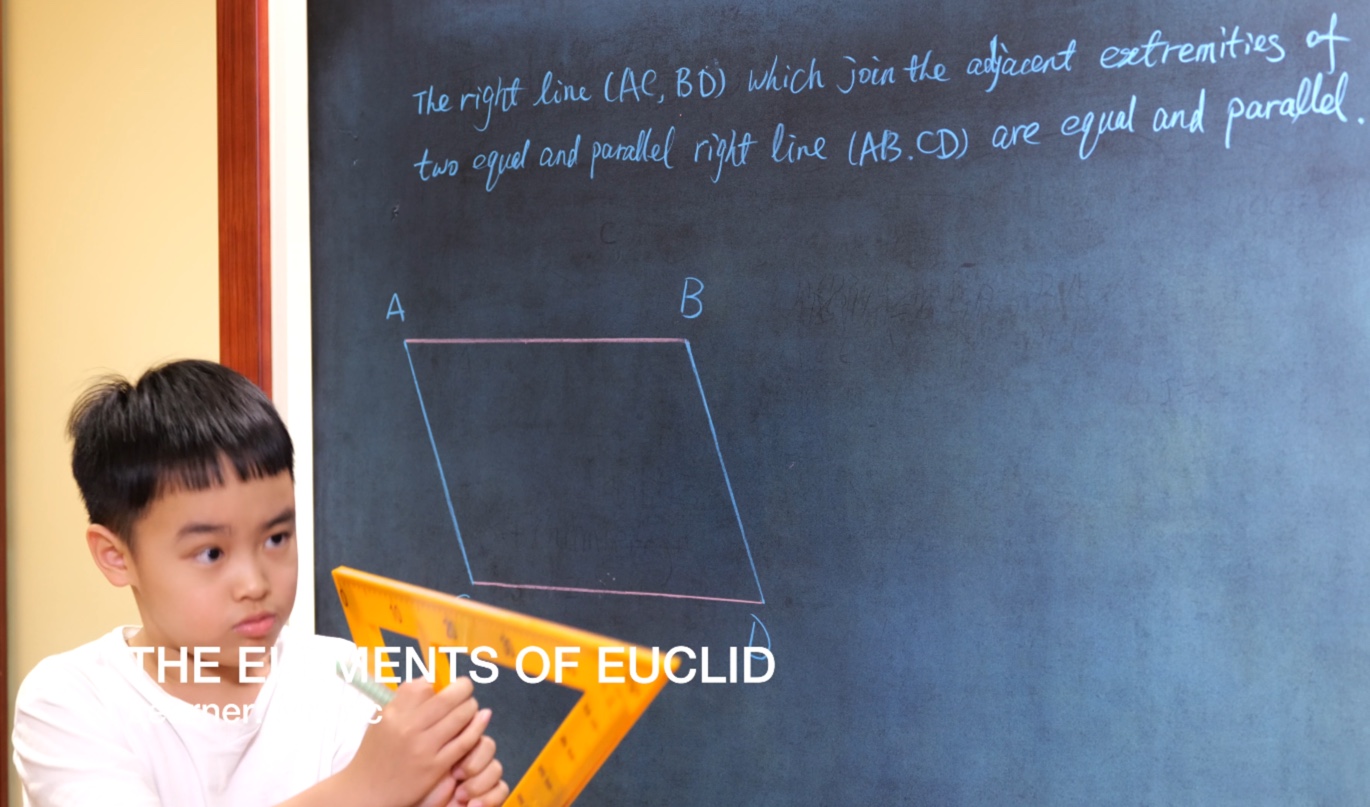
The right lines (AC, BD) which join the adjacent extremities of two equal and parallel right lines (AB, CD) are equal and parallel.
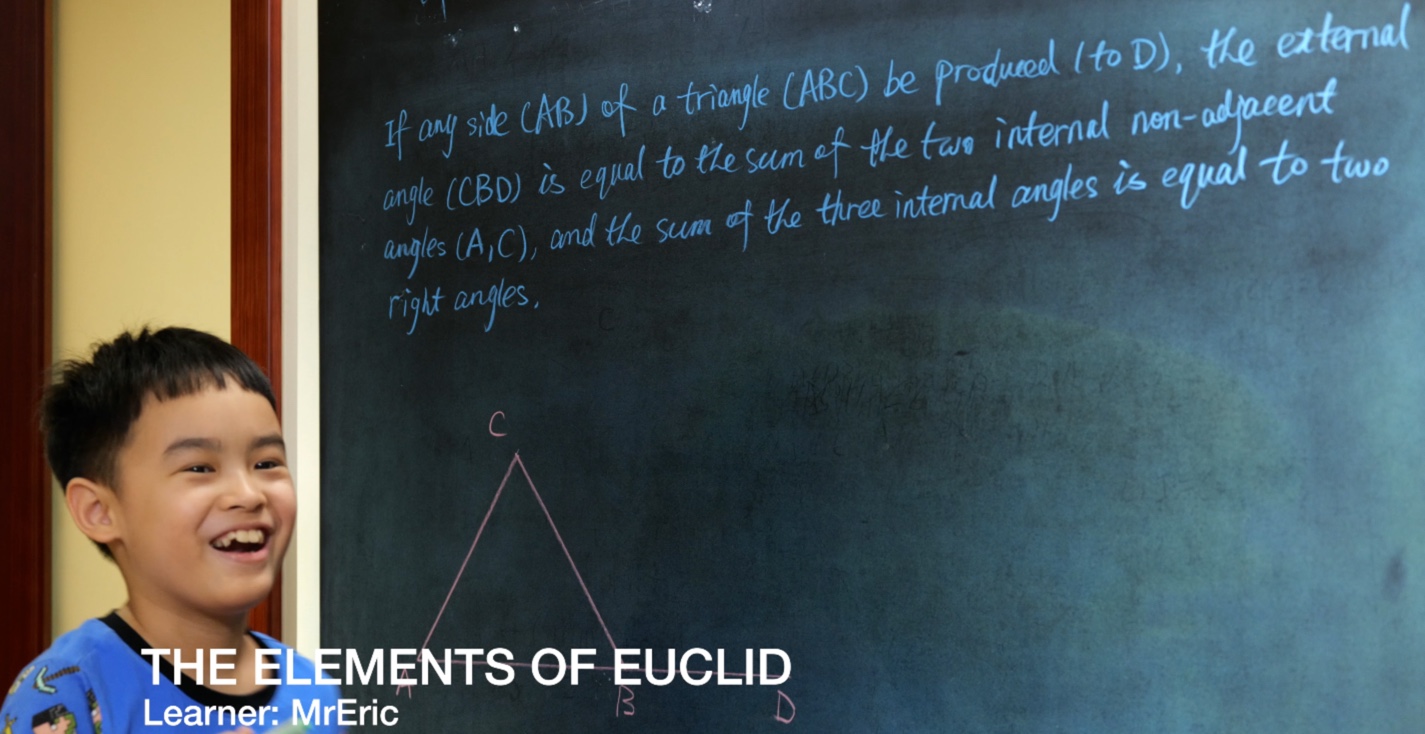
If any side (AB) of a triangle (ABC) be produced (to D), the external angle (CBD) is equal to the sum of the two internal non-adjacent angles (A, C), and the sum of the three internal angles is equal to two right angles.
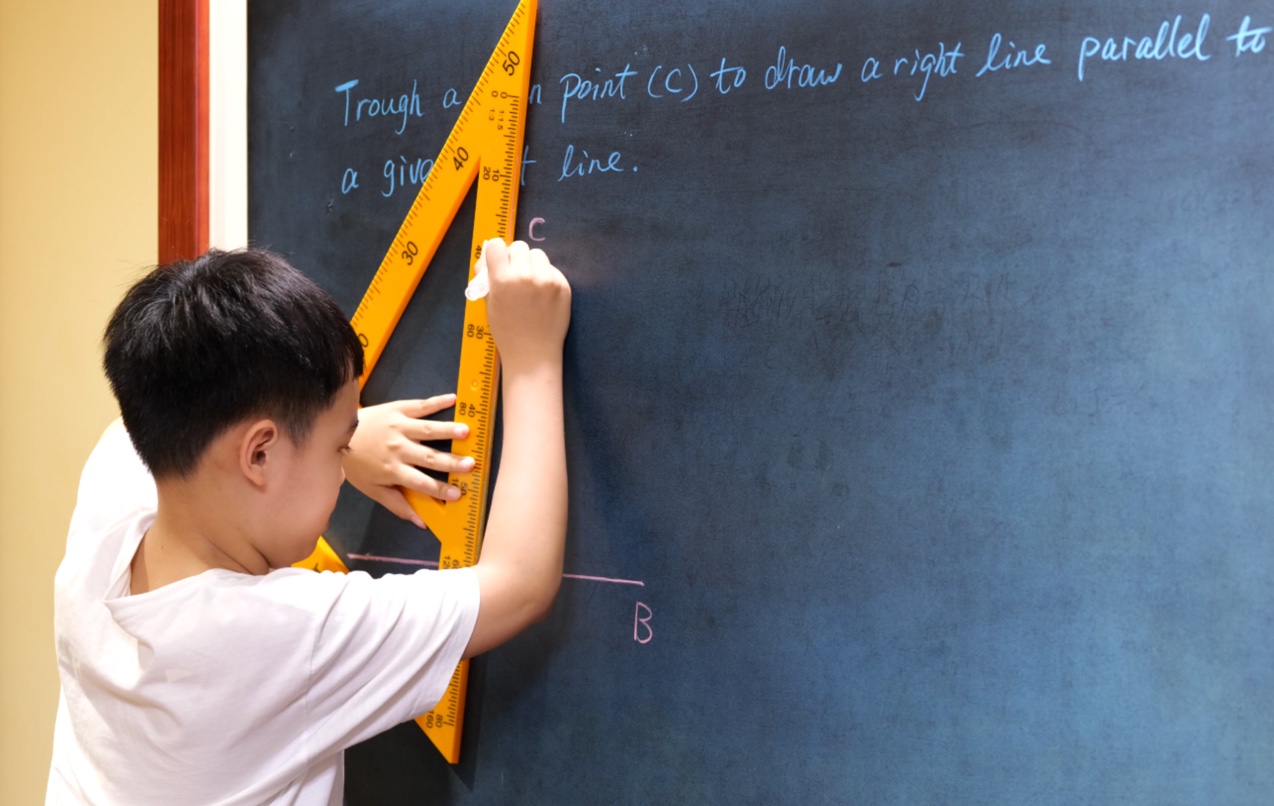
Through a given point (C) to draw a right line parallel to a given right line.
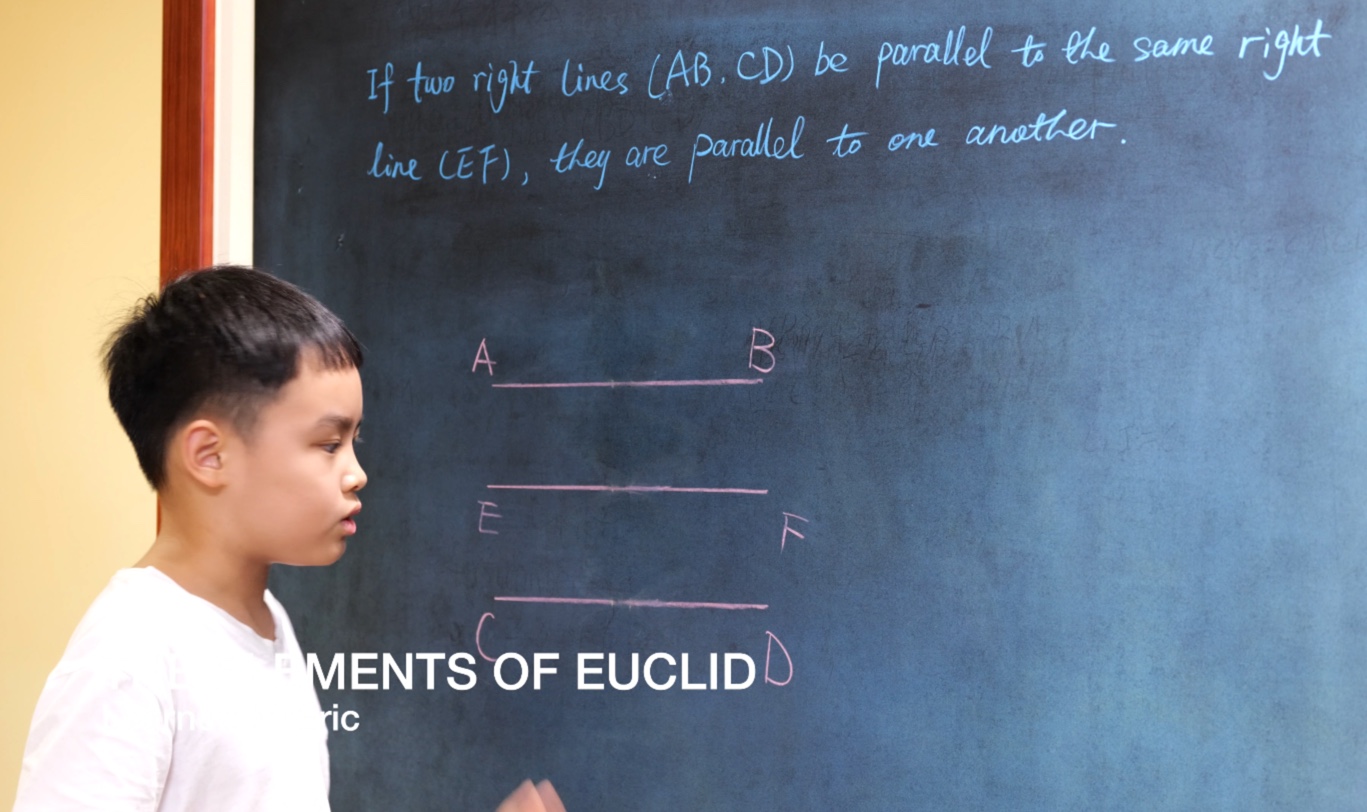
If two right lines (AB, CD) be parallel to the same right line (EF), they are parallel to one another.
If a right line (EF) intersect two parallel right lines (AB, CD), it makes:
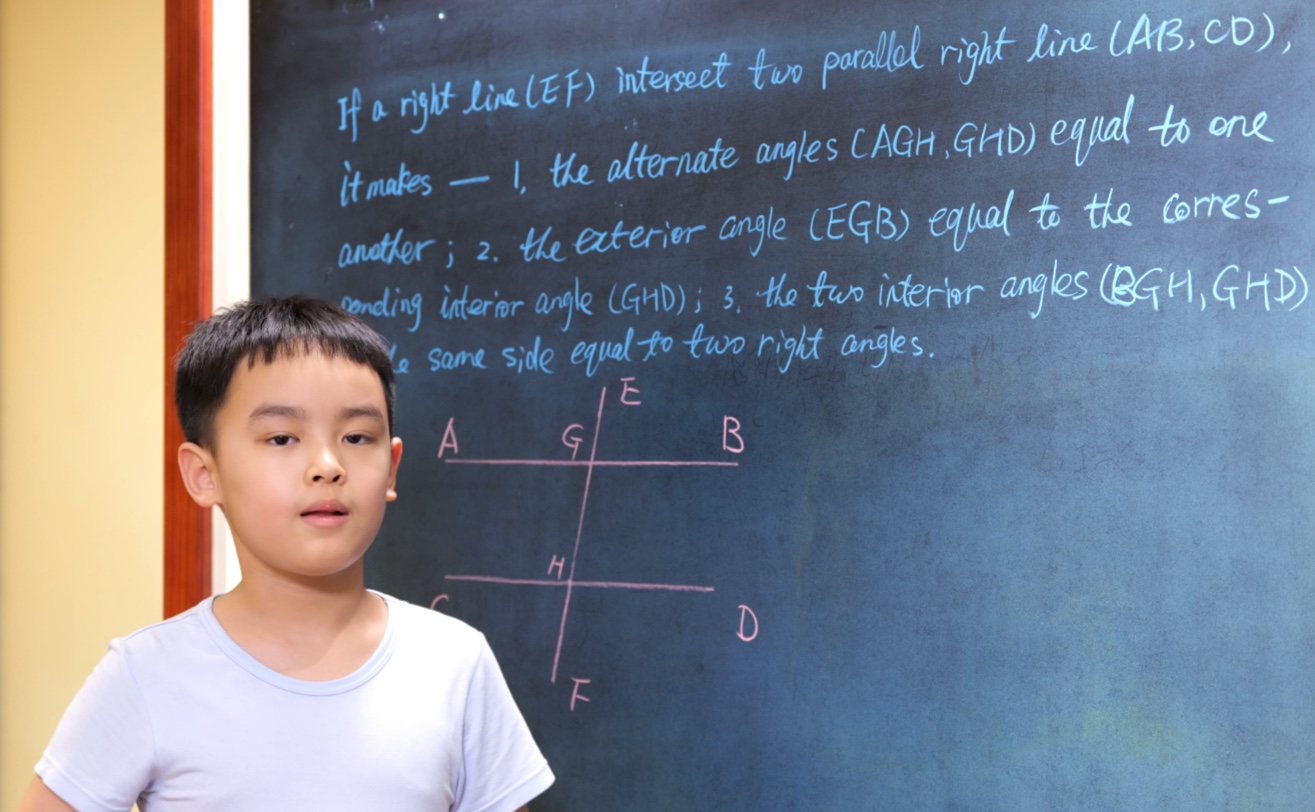
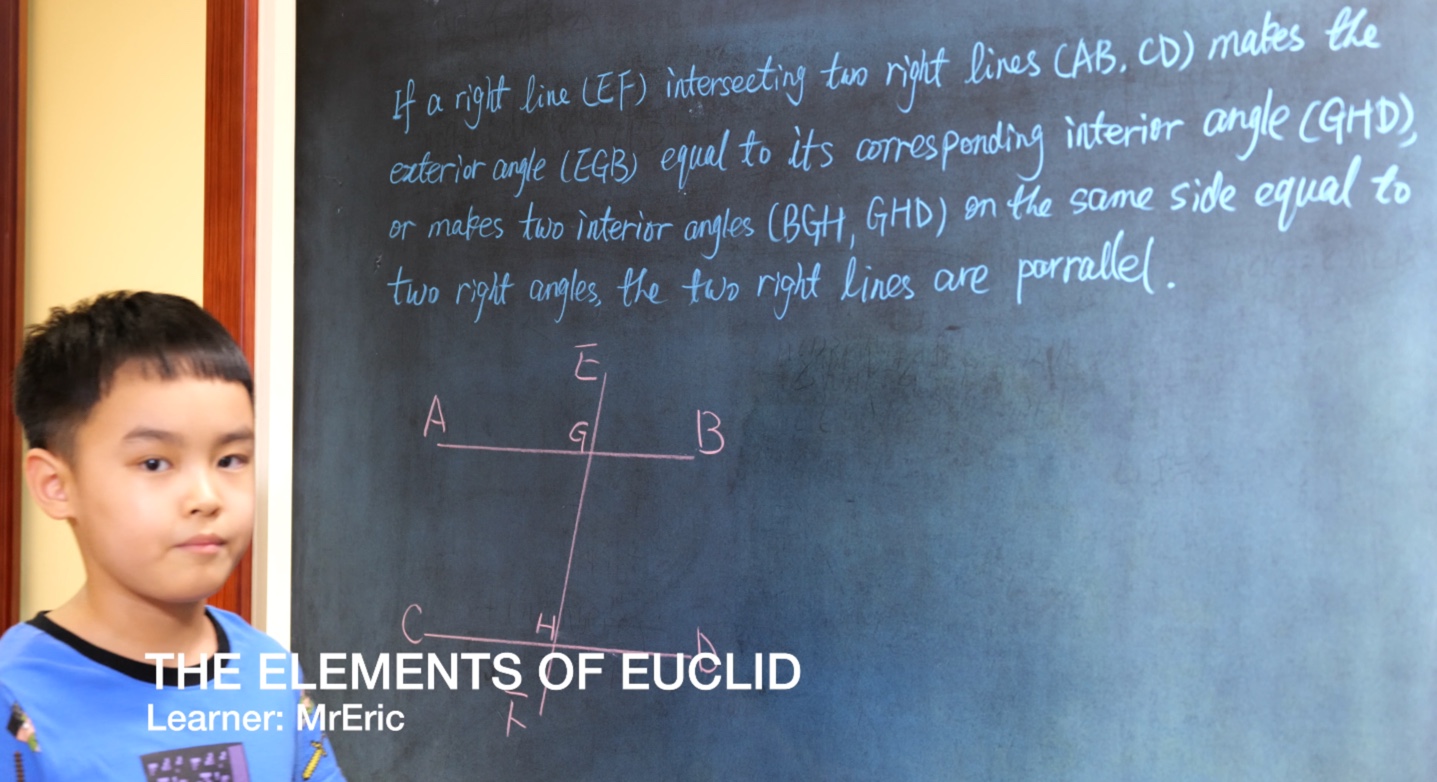
If a right line (EF) intersect two parallel right lines (AB, CD) makes the exterior angle (EGB) equal to its corresponding interior angle (GHD), or makes two interior angles (BGH, GHD) on the same side equal to two right angles, the two right lines are parallel.
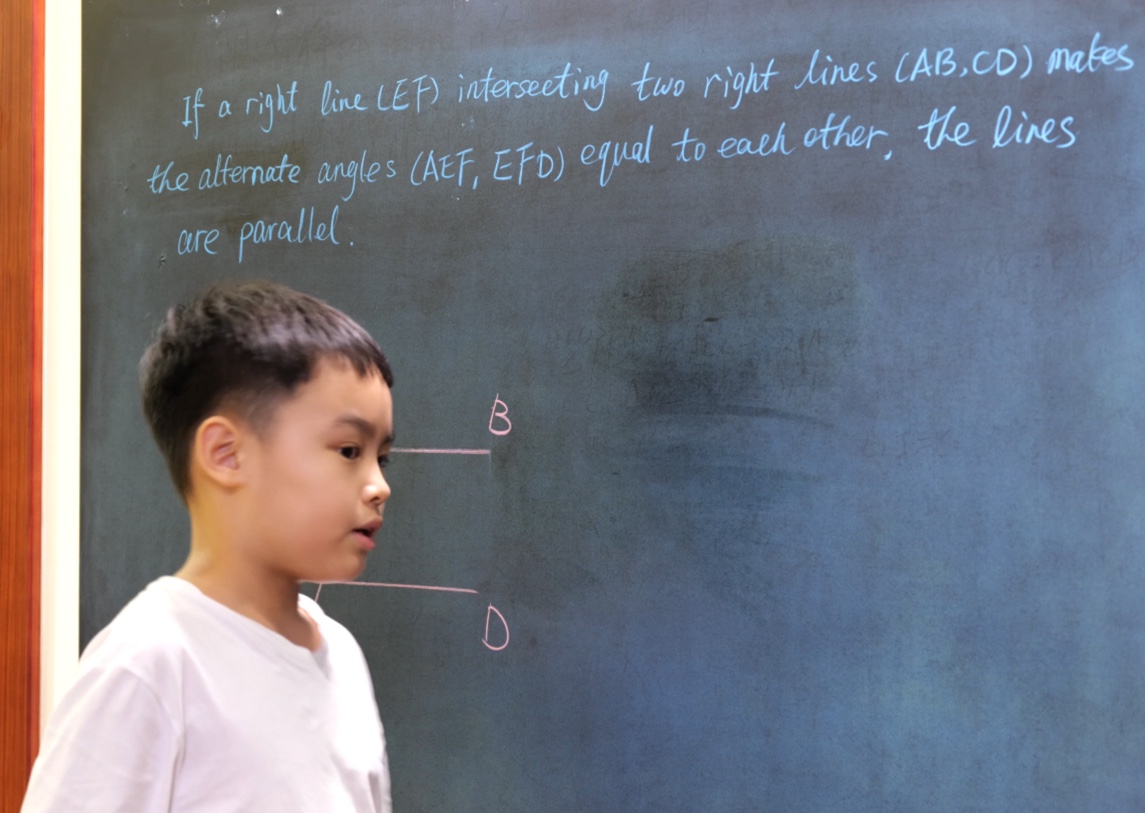
If a right line (EF) intersecting two right lines (AB, CD) makes the alternate angles (AEF, EFD) equal to each other, these lines are parallel.
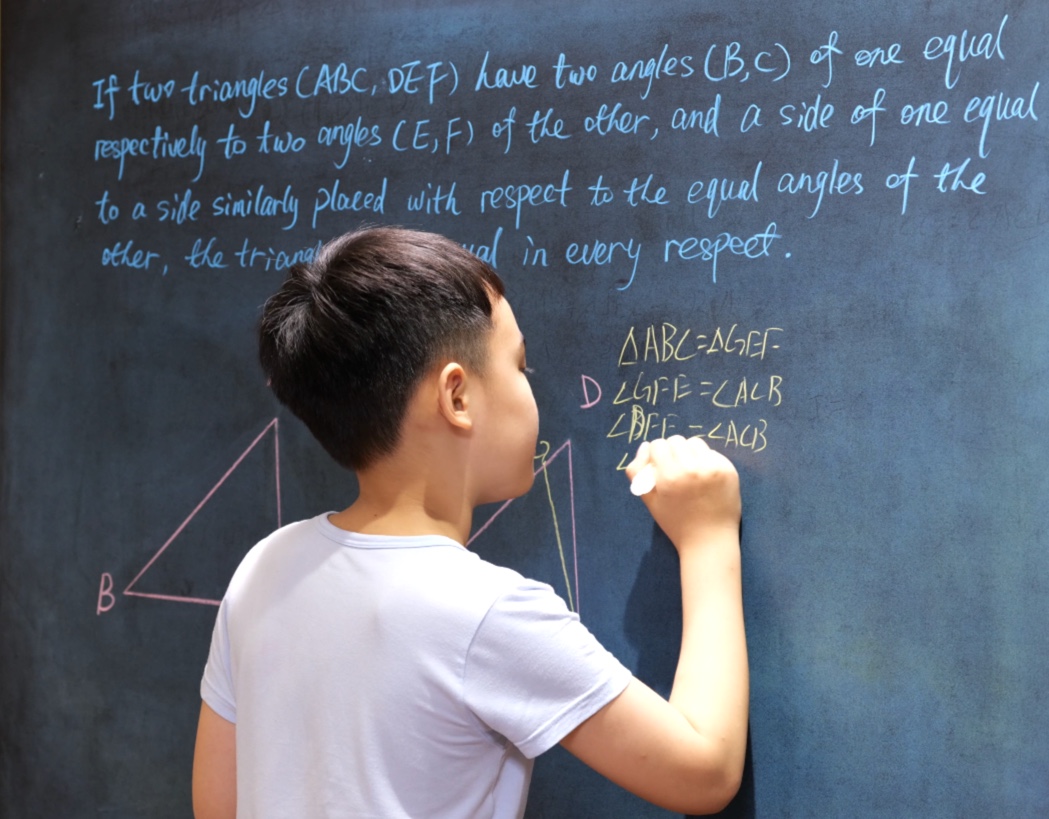
If two triangles (ABC, DEF) have two angles B, C) of one equal respectively to two angles (E, F) of the other, and a side of one equal to a side similarly placed with respect to the equal angles of the other, the triangles are equal in every respect.